
Physio After Surgery: Benefits for Knee and Shoulder Rehab
Surgery can be an important step towards getting you moving well again, but the operation itself is only one part of the recovery process. What happens afterwards matters too.
Physio after surgery can provide a structured rehabilitation programme to help restore movement, rebuild strength and work towards the activities that matter to you. At Live Strong Physiotherapy in St Agnes, Cornwall, post-surgical rehabilitation includes knee and shoulder surgery, with rehabilitation planned around your individual needs and goals.
Key Takeaways
- Post surgery physiotherapy should reflect your operation, surgeon's guidance and individual recovery.
- Knee and shoulder surgery require different rehabilitation approaches and recovery timelines.
- Mobility, range of motion and strength can be progressed gradually as recovery allows.
- Your physiotherapy recovery plan should focus on meaningful milestones rather than a fixed number of sessions.
- Rehabilitation can support goals ranging from daily activities to returning to sport.
What Are the Benefits of Physio After Surgery?
Post operative physiotherapy gives your recovery a clear direction. Rather than simply waiting for things to improve, rehabilitation can help you work progressively towards better movement, strength and function.
According to NICE guidance on joint replacement rehabilitation, rehabilitation after knee and shoulder replacement can include advice on daily activities, home exercise and, where needed, supervised individual rehabilitation.
Restoring Movement and Range of Motion
Joint stiffness is common after periods of reduced movement, but the right approach depends on the surgery you have had. A personalised physio plan can include suitable mobility exercises and gradual work on range of motion while respecting any restrictions from your surgeon.
Shoulder rehabilitation needs particular care because some operations require the repaired tissues to be protected during the early stages. The timing of shoulder movement should therefore follow the surgical team's advice rather than a generic exercise plan.
Rebuilding Strength
Reduced activity around surgery can leave muscles weaker and everyday tasks more difficult. As recovery progresses, strengthening exercises can be introduced and developed according to what your joint can safely tolerate.
Live Strong combines exercise rehabilitation with strength and conditioning, and you can learn more about the wider benefits of progressive strength training.
Returning to Daily Life and Sport
A good rehabilitation plan is not just about what your knee or shoulder can do in the clinic. It should relate to real life.
That might mean getting comfortable walking upstairs after knee surgery, reaching overhead after shoulder surgery, returning to work or gradually rebuilding the capacity needed for sport.
Live Strong's post-surgical rehabilitation information confirms that rehabilitation can be planned around goals including pain relief, return to sport and performance.
Physio After Knee Surgery
Physio after knee surgery will depend heavily on the procedure. Rehabilitation following an ACL reconstruction, for example, is different from knee replacement rehabilitation, so there is no single set of surgery recovery exercises suitable for everyone.
Early Knee Surgery Rehabilitation
Early knee surgery rehabilitation may focus on restoring appropriate movement, improving mobility and beginning to use the leg safely within your post operative care instructions.
After ACL surgery, the NHS advises that physiotherapy and home exercises form part of recovery, with exercises used to support longer-term knee movement and strength.
Swelling management may also be relevant during the early stages. Your physiotherapist can help you understand what level of activity is appropriate and how to progress without ignoring restrictions set by your surgeon.
Building Strength and Knee Control
As the knee settles, rehabilitation can progress towards rebuilding lower-limb strength and control. Depending on your goals, this might include progressively more demanding exercises for walking, stairs, balance, lifting or sport.
For ACL rehabilitation in particular, recovery is usually a longer process. The NHS guidance on recovering from ACL surgery notes that recovery can take several months or longer, while returning to sport may take up to several years for some people. This is one reason recovery milestones matter more than rushing towards a particular date.
Physio After Shoulder Surgery
Physio after shoulder surgery also needs to be specific to the operation. Rotator cuff repair, shoulder stabilisation and shoulder replacement can all involve different restrictions and rehabilitation timelines.
Protecting the Shoulder During Early Recovery
In the early stages, the priority may be protecting healing tissues while maintaining the movement your surgical team has allowed.
After some procedures, you may be advised to use a sling or temporarily limit particular movements. Royal Orthopaedic Hospital guidance following rotator cuff repair, for example, stresses protecting the repair and following the rehabilitation programme given by the clinical team.
This is why generic shoulder exercises found online are not a substitute for a procedure-specific plan.
Regaining Movement and Strength
As healing progresses, shoulder surgery rehab may move towards improving range of motion, reducing joint stiffness and rebuilding strength.
Later rehabilitation can become increasingly relevant to the things you actually need your shoulder to do, whether that is dressing comfortably, lifting at work, getting back into the gym or returning to a particular sport.
What Happens During Physiotherapy After Surgery?
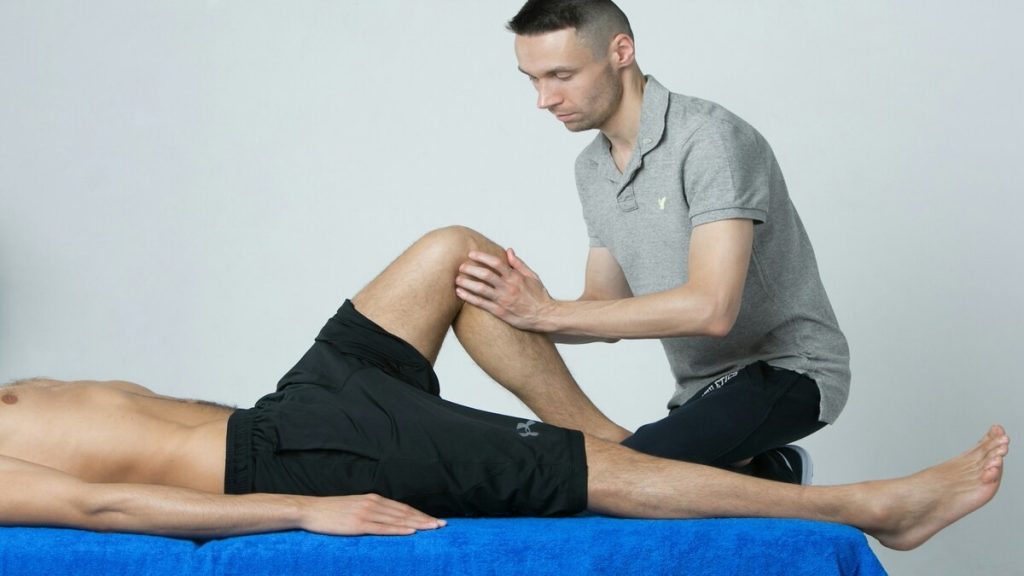
At Live Strong, an initial physiotherapy appointment can include discussion of your injury and medical history, movement analysis, strength testing, goal setting and development of a personalised rehabilitation plan.
Following surgery, your physiotherapist will also need to understand which operation you have had and any restrictions or guidance supplied by your surgical team.
Your physiotherapy recovery plan can then develop as your recovery changes. Rather than performing the same exercises week after week, the aim is to progress mobility, strengthening exercises and functional tasks when appropriate.
How Many Physio Sessions Will You Need After Surgery?
There is no standard answer to how many physio sessions after surgery you will need.
The number and frequency can depend on your procedure, current movement and strength, goals, training demands and how consistently you can work on your rehabilitation between appointments. Live Strong's own guidance reflects this individual approach rather than prescribing a fixed package of sessions.
Some people may mainly need guidance and periodic progression. Others may benefit from more regular support as they work through different recovery milestones.
Knee and Shoulder Surgery Rehabilitation at Live Strong
Post-surgical rehabilitation is an established part of the service at Live Strong Physiotherapy. The clinic specifically supports rehabilitation following procedures including ACL surgery, shoulder surgery and knee replacement.
Knee and shoulder rehabilitation are a particular focus because recovery often requires more than simply waiting for pain to settle. Restoring movement, rebuilding muscle weakness, improving strength and preparing for the demands of daily life or sport all need to be considered.
For people working towards higher-level activity, Live Strong also specialises in sports physiotherapy, including strength programming, biomechanical analysis and return-to-sport planning.
You can find out more about the physiotherapy approach and clinician background on the Live Strong Physiotherapy About page.
Recovery Milestones Matter More Than a Fixed Timeline
Recovery timelines are useful as a general guide, but they should not be the only measure of progress.
Depending on the operation, useful milestones might include improvements in range of motion, strength, balance, walking, upper-limb function or confidence completing everyday activities.
Your return to sport should also reflect what your body is ready to do rather than simply how many weeks have passed since surgery.
If your recovery changes unexpectedly, or you have concerns about your wound, symptoms or general health, contact the appropriate surgical or medical team for advice rather than trying to manage the issue through exercise alone.
Start Your Post-Surgery Rehabilitation
Whether you are preparing for rehab after knee or shoulder surgery, the aim is to build a recovery plan that matches your operation, current ability and where you want to get back to.
Live Strong Physiotherapy provides one-to-one rehabilitation in St Agnes, Cornwall, with support for people returning to everyday activities, training and sport. You can book a physiotherapy appointment to discuss your recovery and the next steps.
FAQs
How Many Physio Sessions Do I Need After Knee Surgery?
There is no fixed number. It depends on the type of knee surgery, your recovery, current strength and mobility, your goals and how you progress between appointments. Your physiotherapist can review these factors and adjust the plan as rehabilitation progresses.
How Long Does Shoulder Surgery Rehab Usually Take?
It varies considerably depending on the operation and individual. Some shoulder procedures require a period of protection before movement and strengthening can progress. Follow the guidance provided by your surgeon and physiotherapist rather than comparing your recovery with someone else's.
What Happens During Physiotherapy After Surgery?
Physiotherapy can include assessment of movement, strength and function, discussion of your goals and a personalised rehabilitation programme. Exercises and activity levels are then progressed according to your recovery and any surgical restrictions.
When Should I Start Physio After Knee or Shoulder Surgery?
This depends on the procedure. Rehabilitation may begin very early after some operations, while specific movements or strengthening may need to wait after others. Follow your surgical team's instructions and arrange physiotherapy around the recommended post operative plan.
Can Physiotherapy Help Me Return to Sport After Surgery?
Physiotherapy can support the process by rebuilding movement, strength and physical capacity before gradually introducing activities relevant to your sport. Return-to-sport decisions should consider your surgery, recovery milestones and individual sporting demands rather than time alone.